


I use Pinterest as a visual planning tool rather than treating it like a normal social feed. That distinction matters. It is useful when I want to collect ideas, compare styles, or keep a project moving, but it can also become a stream of tempting recommendations that quietly expands beyond the task I started with. My experience is strongest when I enter with a clear purpose and leave after saving a small, organized set of references.
Developed by Pinterest, this free lifestyle app is available for Android and iOS, with optional in-app purchases ranging from $5.88 to $41.17 per item. It is rated Teen, and its scale is substantial: more than a billion installs, an average rating of 4.3, about 11 million ratings, and roughly 703,000 reviews. Those figures suggest a mature, widely used service, but they do not remove the need to think carefully about what I save, what I follow, and how much personal information I want connected to an inspiration platform.
How Pinterest earns trust in everyday use
The first thing I notice is that Pinterest asks me to make choices about the kind of experience I want. I can search for a subject, save images to boards, follow interests, and return to collections later. That structure gives me more control than an entirely passive feed because I can decide whether a discovery belongs in a board or should simply be ignored.
Related News

Coloring Games: A Digital Canvas for Mindful Creativity

Embracing Digital Minimalism with Files by Google

How Matchington Mansion Thrives with New Android and iOS Updates
Still, the service is designed around personalization. The more I search, save, and interact with ideas, the more tailored the visual recommendations can feel. That is convenient when I am planning a room or looking for recipes, yet it also means my activity becomes part of the experience I receive. I treat the home feed as a suggestion layer, not as a neutral catalogue.
The practical trust question is not whether Pinterest can inspire me; it is whether I can keep that inspiration within boundaries I understand. I am comfortable using it for broad interests, but I avoid putting sensitive personal details into searches or boards. A public-looking collection about a hobby is one thing. A board that reveals private plans, a child’s routine, a medical concern, or a precise location deserves much more caution.
Related News

Why WhatsApp Messenger Still Makes Everyday Communication Feel Easy

Jurassic World: The Game Is the Better Dino Tycoon for Strategic Players

Threads in Real Life: Who Should Join, Lurk, or Leave

How SHEIN Turned Shopping Into an Endless Content Feed

How to Make Fortnite Feel Smarter on Mobile

Should You Switch to Microsoft Outlook on Mobile?
The Teen content rating is another useful reminder. Pinterest is not a private notebook by default, and visual search can lead from harmless references to material that is unsuitable for every viewer. I would not hand the app to a younger user without discussing account settings, sharing habits, and the difference between saving something for personal planning and publishing it for others to discover.
What I can control while browsing
My most reliable control is the decision to search deliberately instead of endlessly scrolling. I often begin with a narrow phrase, open a few promising results, and save only the items that support the project. This reduces the chance of allowing unrelated recommendations to define the session.
Boards are more than simple folders. I use separate boards for broad inspiration and practical decisions. For example, one board can hold general kitchen styles, while another contains the specific cabinet colors, lighting ideas, and storage details I might actually discuss with a contractor. That separation prevents an attractive image from being mistaken for a realistic plan.
Gallery
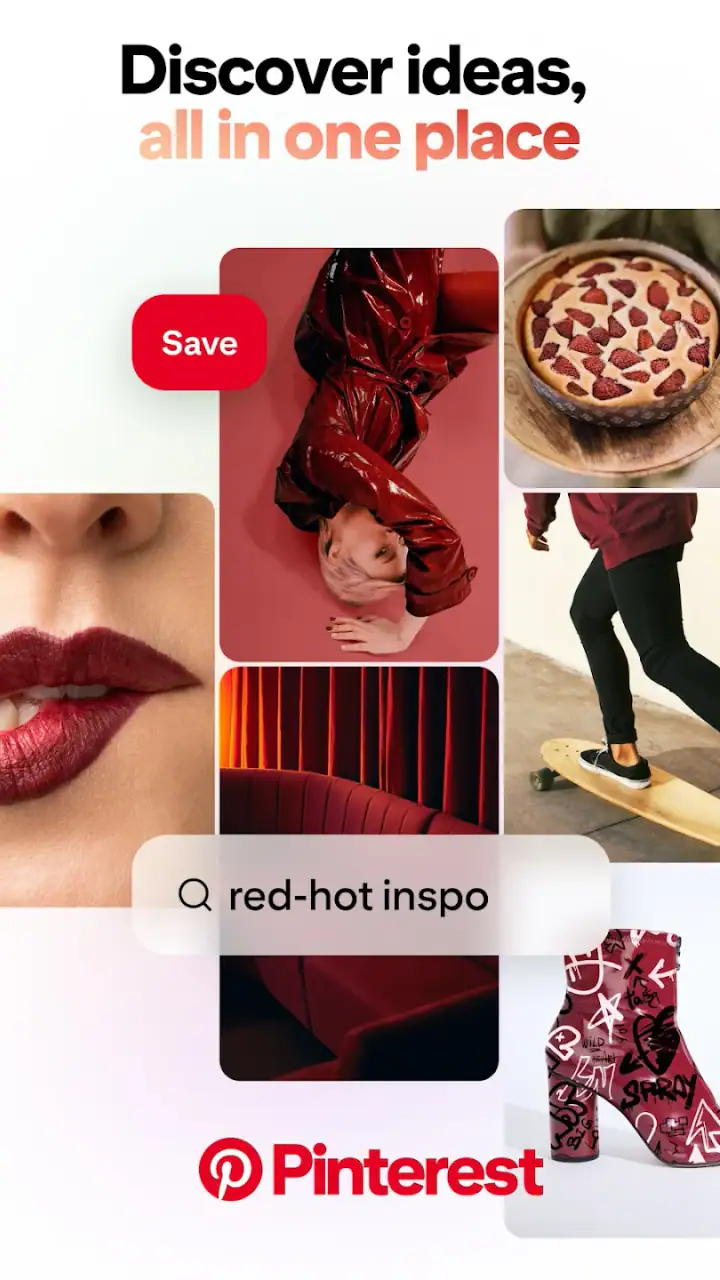
Another useful habit is reviewing a board after the initial excitement has passed. I look for repeated ideas, unrealistic layouts, or images that are visually appealing but not useful for my space, budget, or skills. Pinterest makes collecting easy; the harder and more valuable work is editing. I see the app as a starting point for judgment, not a replacement for it.
When I save an image, I also consider its context. A picture may be a finished project, a product image, a personal post, or a republished idea. I do not assume that an attractive image proves a method will work, that a product is still available, or that the original creator intended the image to be used commercially. For planning, I use saved material as reference and verify important details elsewhere.
Account choices and personal boundaries
The account itself is part of the trust experience. I prefer using a profile identity that does not reveal more than necessary, especially when my boards concern private interests. I also think carefully before connecting an account to other services or sharing collections with people who do not need access to everything I have saved.
Private planning is where account controls matter most to me. If I am collecting gift ideas, travel possibilities, or home changes that I do not want broadly visible, I check the board’s visibility before saving. I do not rely on the assumption that a personal intention will remain private simply because I have not actively shared it with a friend.
Sharing is useful, but it changes the responsibility. A board sent to a decorator, partner, or friend can communicate a mood more quickly than a long message. At the same time, I remove unrelated or overly personal items before sharing. A carefully edited board is easier to understand and exposes less of my browsing history than sending someone access to an entire profile.
I also separate inspiration from identity. Following every interest that catches my attention can produce a more entertaining feed, but it may create a profile that reflects temporary curiosity rather than stable preferences. I use follows selectively and revisit them when the recommendations become repetitive or too narrow.
Data-sensitive moments I pay attention to
Search is the moment when I am most deliberate. A search can be practical, personal, or revealing, and the visual results may encourage me to continue refining it. If the subject involves health, finances, family circumstances, or a specific upcoming event, I use general wording or avoid entering the detail altogether. I can still gather broad ideas without turning a private situation into a detailed activity trail.
Location-related planning deserves similar care. Pinterest can be helpful for travel mood boards, local decoration styles, or event ideas, but I do not combine a precise location with dates, names, and personal plans in a public collection. The more pieces I place together, the easier it becomes for a casual viewer to understand my routine or intentions.
Images can contain more information than the visible subject. A photograph of a room may reveal an address, a school uniform, a family member, or documents left in the background. Before saving or sharing, I look past the main design idea. This is a small step, but it is one of the most concrete ways I reduce accidental exposure.
I am also careful with commercial decisions. Pinterest is excellent for discovering styles and comparing visual directions, but I do not treat a pin as proof of a seller’s reliability or a product’s current terms. If I am considering a purchase, I check the retailer, specifications, delivery details, and return conditions independently. The app helps me find possibilities; it is not the final authority on a transaction.
The optional purchase model is worth keeping in mind. The app itself is free, while in-app items can cost between $5.88 and $41.17. I would not spend simply because a promoted idea fits the mood of a board. I first decide whether the item solves a real problem, then leave Pinterest to compare the details in a setting designed for purchasing information.
A realistic project workflow
Imagine I am refreshing a small bedroom. I begin with one board for atmosphere, saving a limited number of images showing colors, textures, and lighting. I then create a second board for decisions: paint shades, storage arrangements, bedside lighting, and layouts that seem possible in the actual room.
Next, I remove duplicates and label the practical items in my own notes or board organization. I compare the images with the room’s measurements instead of assuming that a spacious photograph will translate directly. I also avoid saving pictures that show personal details I do not need. When I am ready to ask a friend for an opinion, I share only the edited decision board.
This workflow reveals Pinterest’s real strength. It turns vague taste into a visual conversation. Instead of saying that I want something “calm but not plain,” I can show several examples and identify the details they share. The weakness is equally clear: the app can make a difficult renovation look effortless because polished images rarely show the compromises, costs, or failed attempts behind them.
Where it fits beside other options
Compared with a standard bookmarking tool, Pinterest is much better at visual discovery. A text-based notes app is faster for exact measurements, supplier information, and task lists, but it does not help me discover a style I cannot yet describe. I use Pinterest for the visual phase and another tool for execution.
Compared with image-heavy social networks, Pinterest feels more project-oriented because boards give saved ideas a longer life than a rapidly moving timeline. However, it still has the same basic tension between discovery and attention. If I want direct conversation with creators or friends, a messaging or community platform may be better. If I want a quiet private archive, a local photo folder or notes app gives me clearer ownership of the collection.
Compared with shopping apps, Pinterest is stronger for comparing moods and finding alternatives, but weaker for dependable product decisions. It can lead me toward an object or retailer, yet I still need to verify availability, quality, and terms elsewhere. That division of labor keeps my expectations realistic.
Who will benefit, and who should skip it
I recommend Pinterest to people who think visually, plan creative projects, collect recipes, organize celebrations, or need examples before making a decision. It is particularly helpful when the problem is not “What do I buy?” but “What possibilities should I consider?” The board system gives those possibilities a shape that is easier to revisit than a pile of browser tabs.
I would be more cautious recommending it to someone who is easily pulled into endless browsing or who wants a strictly private, distraction-free workspace. The app rewards curiosity, and a five-minute search can become a long session of adjacent ideas. People who need precise, authoritative information should also use a specialist source rather than relying on visual posts.
It is not my first choice for confidential journaling, detailed personal planning, or managing a project from start to finish. I also would not use it as the only source for health, legal, financial, or safety decisions. Its value is strongest at the stage where examples, comparisons, and visual communication matter.
My cautious verdict
After using Pinterest as a lifestyle app, I see it as a powerful collection and discovery space with a clear trade-off: it gives me unusually good visual organization, while its personalized nature requires active boundaries. I get the best results when I search with intent, keep sensitive subjects general, review board visibility, and treat every image as inspiration rather than verification.
The app’s long availability since August 14, 2012, its Teen rating, and its broad adoption make it feel established, but trust still comes from my own choices inside the service. I decide what to save, what to share, which interests to follow, and whether a recommendation deserves further investigation. Those choices are more important than the size of the platform.
My recommendation is positive but selective: use Pinterest when you need to see possibilities, organize visual references, or explain a style to someone else. Keep execution details, private information, and purchase verification in tools better suited to those jobs. With that division in mind, I find it genuinely useful rather than merely addictive, and I would recommend it to a friend who wants inspiration with a little discipline.
FAQs for Pinterest
What is Pinterest and how does it work?
Pinterest is a visual discovery app used for finding ideas like recipes, home decor, and style inspiration. Users create and share collections of visual bookmarks called 'pins' on boards. You can follow other users, explore categories, and search for specific topics to find inspiration tailored to your interests.
Is Pinterest free to use?
Yes, Pinterest is free to download and use. It offers a wealth of content from various users across the globe. While the app itself is free, it may feature links to products or services that require payment if you choose to purchase through them.
Can I use Pinterest without an account?
While you can browse Pinterest without an account, creating one allows you to save, organize, and share pins and boards. An account also lets you follow other users, comment on pins, and receive personalized suggestions based on your interests.
How can I ensure my privacy on Pinterest?
Pinterest offers several privacy settings to control who sees your activity. You can make your boards secret, meaning only you or people you invite can view them. Additionally, you can manage your account settings to limit data sharing and control notifications.
What devices and operating systems support Pinterest?
Pinterest is compatible with both Android and iOS devices. It can be downloaded from Google Play Store and Apple App Store. Additionally, Pinterest is accessible via web browsers on desktops and laptops, making it versatile for various platforms.
Pros
- Vast collection of creative ideas.
- Easy-to-use interface.
- Personalized content suggestions.
- Ability to organize content in boards.
- Available on multiple platforms.
Cons
- Requires internet connection.
- Can be addictive.
- Limited offline access.
- Ads can be intrusive.
- Some content may be misleading.


